In early fall, you will receive a letter with your child’s results on California’s new state standardized tests. Trying to interpret them might feel like a test for you!
What’s important to focus on and what do these results tell you about your child’s academic progress?
In our 21st century economy, the vast majority of middle-class jobs require education beyond high school. In 2015, only about 5 out of every 10 Bay Area seniors graduated eligible for college – and just 3 out of every 10 Latino and African American students. That means helping kids from very early on
– it’s much easier to stay on track than to catch up later.
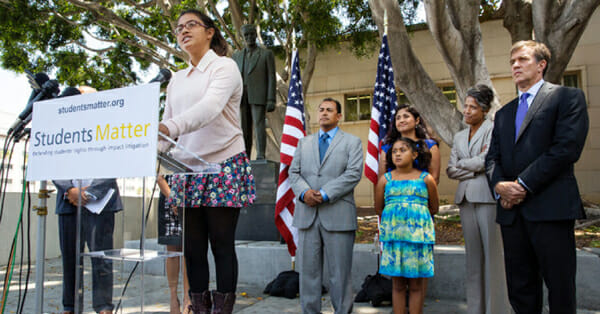
In May 2012, nine public school children, supported by the group Students Matter, filed a lawsuit against the state of California challenging provisions of state law that they said interfere with their right to a quality education.
As its very name suggests, middle school is a transitional period, a time when students begin adjusting to new ways of learning and some of the more challenging material they’ll face in high school.
So many studies have shown the positive benefits of education that we don’t need to cite statistics to convince people it’s an important investment — not only for our own kids, but for our entire society. For instance, people with more education generally have higher lifetime earnings.